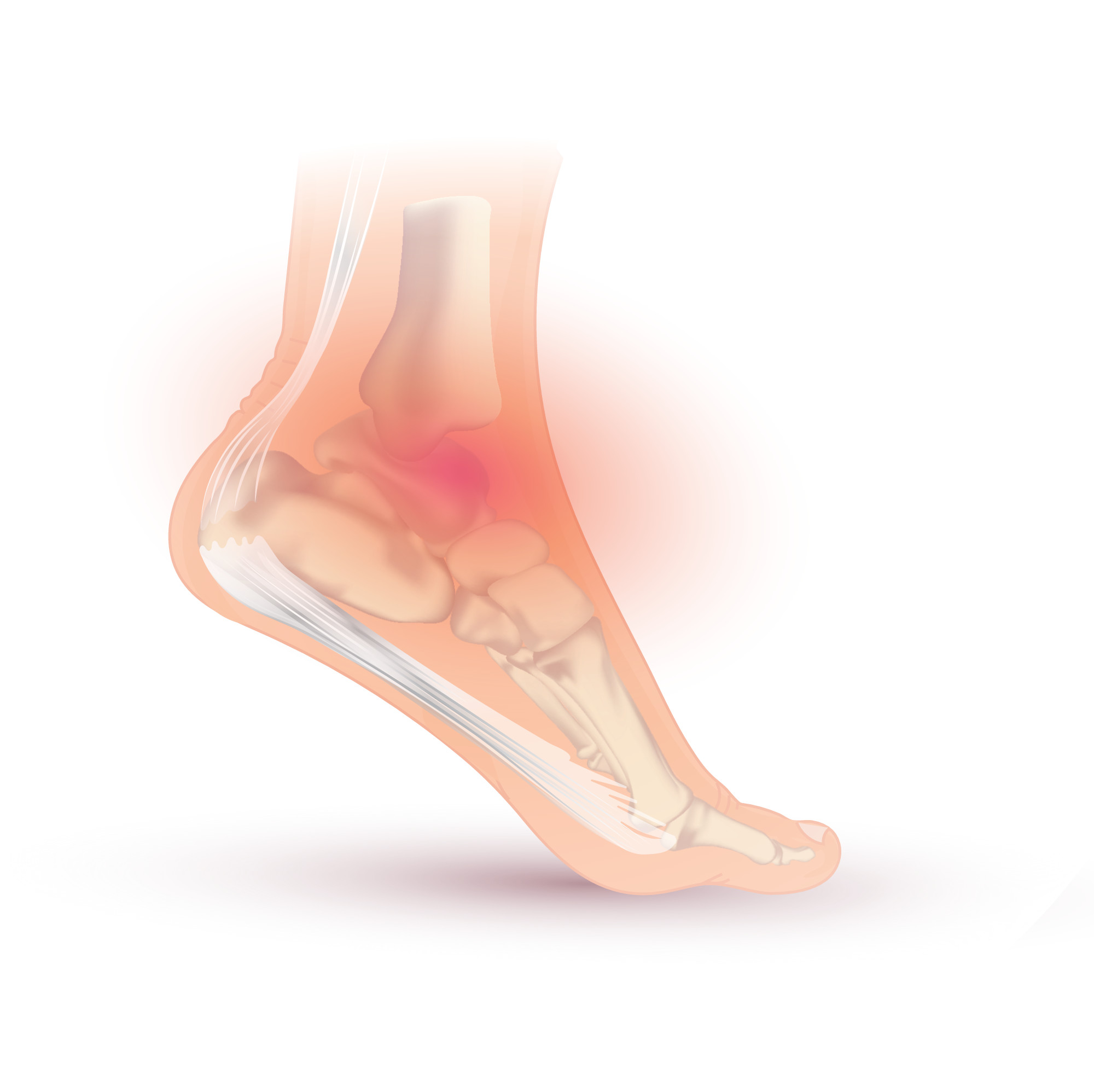
InjuryMap, <a href="https://commons.wikimedia.org/wiki/File:Ankle_Sprain.jpg">Wikimedia Commons</a>, <a href="https://creativecommons.org/licenses/by/4.0/">CC BY/4.0</a>. Unmodified.
A player lands on an opponent’s boot, the ankle rolls and the physio is called onto the pitch. An ordinary ankle sprain can look dramatic, yet the period of absence varies considerably. The degree of ligament damage, the stability of the joint and the presence of associated injuries are more informative than the initial appearance alone.
Which ligament has been injured?
Ligaments connect bones and contribute to the stability of the ankle. The lateral ligament complex on the outside of the joint includes the anterior talofibular, calcaneofibular and posterior talofibular ligaments. The anterior talofibular ligament is particularly vulnerable when the foot rolls inwards, especially when it points downwards.
The deltoid ligament complex on the inner side helps resist excessive outward movement. An injury here may follow a different mechanism and can occur alongside a fracture or syndesmotic damage. The latter involves the structures connecting the two lower-leg bones and is a distinct injury.
A sprain is not a muscle strain. The damaged tissue is ligamentous, and its ability to provide mechanical stability can be affected. Even after the ligament heals, the player may have difficulty controlling the ankle during rapid movements.
Understanding the grades
A mild sprain involves limited tissue disruption and relatively preserved stability. Moderate injuries involve more substantial partial damage, while severe injuries may include complete rupture and considerable laxity. Different grading systems and examination techniques mean that a grade reported by one club should not automatically be compared with another.
Pain, bruising, swelling and difficulty bearing weight are common signs. A clinician assesses the injury mechanism, local tenderness, movement and stability. Radiographs may be needed to rule out a fracture, while further imaging may be appropriate for persistent symptoms or suspected complex damage.
A deformed ankle, numbness, a cold foot or severe trauma requires urgent assessment. Inability to bear weight or significant bony tenderness should also prompt medical evaluation rather than an attempt to continue the match.
Frenkie de Jong’s diagnosis
In March 2024, Barcelona confirmed a lateral ligament sprain in Frenkie de Jong’s right ankle. The announcement identified the region of ligament damage without giving supporters a precise recovery date.
Another Barcelona example is Sergi Samper, whose medical update in January 2018 described a fracture and rupture of a medial ankle ligament requiring surgery. This was a combined injury, not an uncomplicated sprain, and demonstrates why the presence of bone damage changes the clinical picture.
How long before the player returns?
A minor sprain may cost only a few training sessions or matches. A moderate injury may require several weeks, while severe or complicated injuries can take months. These are broad expectations and the player’s progress is more important than trying to assign a fixed date from the initial diagnosis.
The NHS guidance on sprains and strains notes that many injuries feel better within a fortnight, although demanding exercise may need to be avoided for longer. Feeling better during daily activities does not establish the capacity to withstand the twisting forces and repeated contacts involved in football.
A player may walk comfortably but struggle with a sharp turn or landing on one leg. Swelling after exercise, restricted ankle movement and apprehension during directional changes can all influence how the medical team progresses rehabilitation.
Restoring more than ligament strength
Most uncomplicated lateral ankle sprains are treated without surgery. Initial care protects the injured joint and manages symptoms, with weight-bearing and movement introduced according to clinical advice. A brace or other support may be appropriate in some cases, while a severe injury can require additional protection.
Rehabilitation gradually restores movement and strength, including the muscles that help control the foot during loading. Balance and coordination exercises address the ability to respond to changes in surface and body position. These capacities are particularly important when a player has to land or turn without time to plan the movement.
Running, hopping and changes of direction are reintroduced as the athlete progresses. Football drills eventually need to include ball work, repeated acceleration and reaction to opponents. Medical teams may also consider taping or bracing during the transition back to competition.
The PAASS approach to match readiness
An international expert consensus published in the British Journal of Sports Medicine proposed five domains for assessing readiness after a lateral ankle sprain. They cover pain, ankle function, the athlete’s own perception of readiness, movement control and sporting performance.
The framework encourages clinicians to look beyond the number of days since injury. A player might have recovered movement but still feel unstable during a tackle, or be able to perform a single jump but not tolerate a full training session. The final decision requires an assessment of these factors together.
Previous sprains can increase the risk of further ankle problems. Continuing balance and strengthening work after a return can help address residual limitations rather than treating the first match back as the end of rehabilitation.
Common questions
Does swelling mean a ligament is completely torn? No. Swelling alone cannot reliably establish the grade of injury.
Is surgery necessary for every complete tear? No. Treatment depends on instability, associated damage and the individual’s response to rehabilitation.
Can an ankle sprain cause persistent instability? Yes. Repeated giving way or persistent symptoms warrant further assessment.
Image: InjuryMap, Wikimedia Commons, CC BY 4.0. Unmodified.
Educational information only. This AI-assisted guide has not been independently medically reviewed and does not replace individual medical assessment or clinician-led treatment. References checked November 2026.